Guides · Perry, Florida
What Has Changed in Perry, Florida? A Timber Town Update
Perry's identity has stayed fixed on timber and its festival for nearly seventy years. But the census numbers show a town more rooted, less transient, than the surrounding region expects.
How Perry Got Its Name and Became the Tree Capital of the South
The settlement that became Perry started out called Rosehead. In 1875 it was renamed Perrytown after Madison Starke Perry, the fourth governor of Florida, and the name was later shortened to Perry. The town was incorporated in 1903 and has served as the county seat of Taylor County ever since.
Timber has driven Taylor County's economy from the start. The longleaf pine forests that cover the region were logged, milled, and shipped out, and the work shaped the town's character as much as its streets. By the mid-1950s, forest fires were crippling the county's timber industry, and local leaders needed a way to teach forestry heritage and fire safety at a time when the woods themselves were under threat. That need produced the Pine Tree Festival in 1956, an event designed to remind people what the forest gave them and how to keep it alive.
The name stuck in a different form. Perry became known as the Tree Capital of the South, a title the town carries openly. The festival that started as a safety lesson became the annual celebration of that identity.
The Florida Forest Festival: 70 Years of Timber Heritage in Perry
The Florida Forest Festival began in 1956 as the Pine Tree Festival, and it has run every year since. What started as a response to devastating forest fires grew into Perry's defining weekend. The Saturday centrepiece is the King Tree Parade, which rolls down Jefferson Street in the morning. From noon, the World's Largest Free Fish Fry is served at Forest Capital Park, alongside chainsaw and cross-cut competitions, the Paul Bunyan Lumberjack Show, and the Great Race 5K.
For a town of fewer than 7,000 people, the festival is a serious undertaking. It is not a tourist attraction in the usual sense. It is a working town's way of marking what it does for a living, and it has kept that focus for nearly seven decades. The fire safety message that started it all may have receded into the background, but the forestry heritage remains the point.
Perry Census Data: A Stable, Year-Round Community
The census figures for Perry tell a story that does not match the usual Florida narrative. Of the 2,968 total housing units in town, zero are held for seasonal or recreational use. Not one. The 552 vacant units are simply empty homes, not second homes waiting for snowbirds. The median home value sits at $122,900, and the median gross rent is $949 a month, numbers that keep housing within reach for people who actually work here.
Perry is a town where people live year-round. The median age is 34.8 years, younger than you might expect for a community built around an old industry, and the population of 6,965 people is stable. This is not a place that empties out after spring break or fills up for the winter. It is rooted, and the housing data backs that up.
Jobs and Education in Perry: A Working-Class Economy
The census numbers on education and employment show a working-class economy. Only 18.6 percent of Perry residents hold a bachelor's degree or higher, and the unemployment rate is 6.6 percent. The median household income is $44,815, a figure that reflects the wages of timber, agriculture, and the service jobs that support them.
These numbers are not a criticism. They describe a town where you can work a trade, own a home, and raise a family without a four-year degree. The forest industry does not demand a diploma; it demands skills with equipment, knowledge of the woods, and a willingness to do physical work. Perry's income and education figures match that reality, and the low cost of housing means the pay goes further than it would in a larger market.
Forest Capital Museum: Perry's Timber History on Display
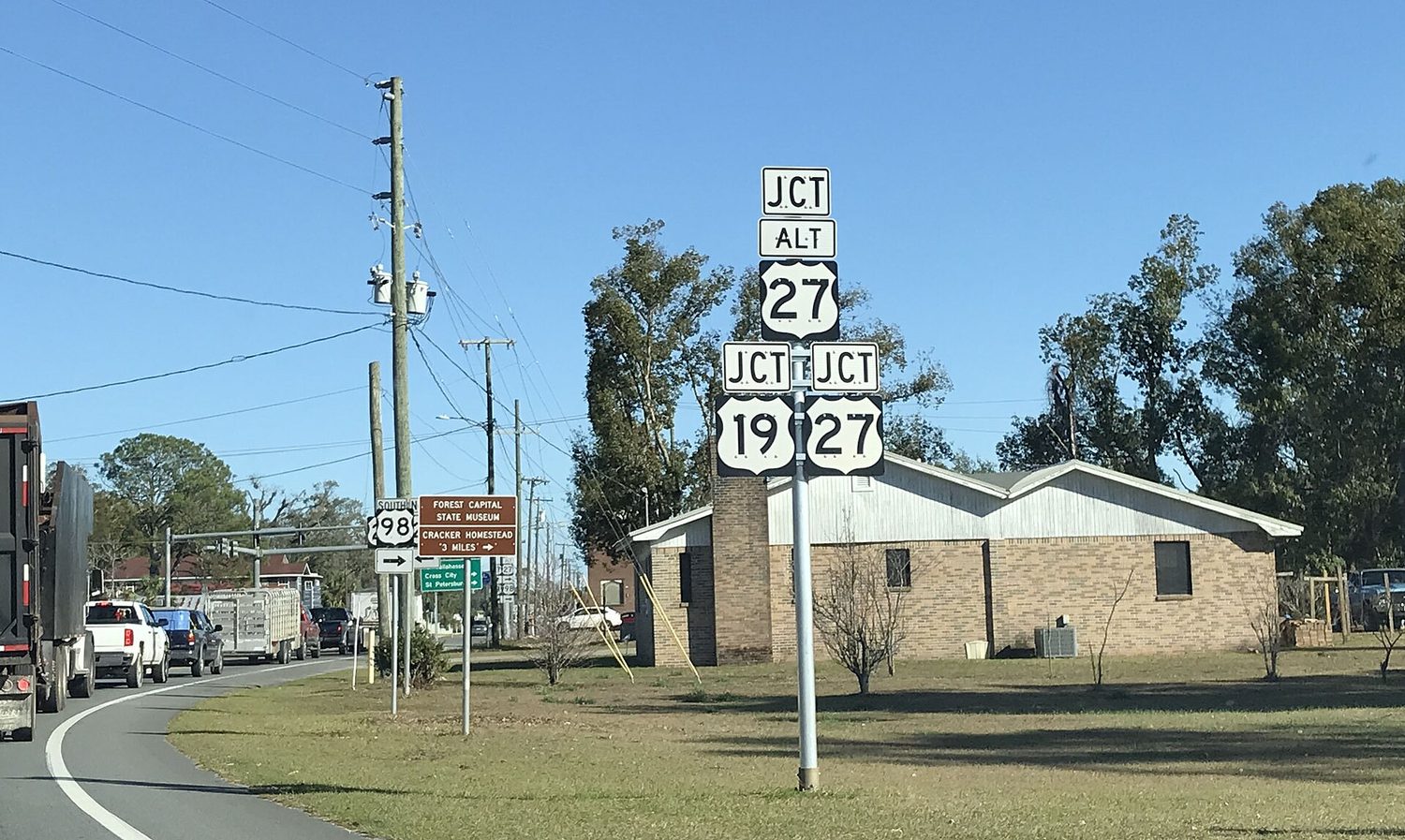
Forest Capital Museum State Park sits on 13 acres one mile south of Perry on US 19/US 98. The museum holds displays on the history of the forest industry and the wildlife of the forest, covering both the human and natural sides of the ecosystem that built the town.
Beside the museum stands a reconstructed Cracker homestead. The house, barn, well, arbor, and garden show how a Florida homestead family lived on the land, and it is a tangible link to a way of life that timber money replaced. The park is not large, but it is deliberate. It exists to preserve the memory of the forest economy and the people who worked it, and it gives visitors a concrete sense of what came before the mills and the trucks.
How Perry's Festival Compares to Other Florida Town Festivals
Perry's festival has a deeper history than most in the region. The Florida Forest Festival has run since 1956, making it older than the Fiddler Crab Festival in Steinhatchee, the Cedar Key Seafood Festival, the St. George Island Chili Cook-Off, the Florida Seafood Festival in Apalachicola, the Florida Scallop, Music & Arts Festival in Port St. Joe, and the Kumquat Festival in Dade City. Those events are all worth a visit, but they tend to celebrate food or recreation. Perry's festival celebrates an industry that still employs the people who live there.
| Town | Festival |
|---|---|
| Perry | Florida Forest Festival |
| Steinhatchee | Fiddler Crab Festival |
| Cedar Key | Cedar Key Seafood Festival |
| St. George Island | St. George Island Chili Cook-Off |
| Apalachicola | Florida Seafood Festival |
| Port St. Joe | Florida Scallop, Music & Arts Festival |
| Dade City | Kumquat Festival |
Perry is not trying to be something else. It is the Tree Capital of the South because that is what it does, and the festival, the museum, and the census numbers all point the same way. The town got its name from a governor, its work from the forest, and its character from both.
Common questions
- Why is Perry called the Tree Capital of the South?
- Perry got the name because timber has been Taylor County's main economic driver for generations. The Florida Forest Festival, running since 1956, celebrates that heritage. The town's identity is built around the working forest, not beaches or tourism.
- When did the Florida Forest Festival start and what is it about?
- The festival began in 1956 as the Pine Tree Festival. It was created to teach forestry heritage and fire safety at a time when forest fires were hurting the county's timber industry. Today it's Perry's defining weekend, with the King Tree Parade and a free fish fry.
- What happens at the Florida Forest Festival on Saturday?
- Saturday starts with the King Tree Parade down Jefferson Street. From noon, the World's Largest Free Fish Fry is served at Forest Capital Park. There are also chainsaw and cross-cut competitions, the Paul Bunyan Lumberjack Show, and the Great Race 5K.
- What can I see at Forest Capital Museum State Park?
- The park is 13 acres, one mile south of Perry on US 19/US 98. It has displays on forest industry history and forest wildlife. Beside the museum, a reconstructed Cracker homestead shows a house, barn, well, arbor, and garden—how a Florida homestead family lived.
- Is Perry a seasonal or vacation town?
- No. Census figures show zero housing units held for seasonal or recreational use out of 2,968 total units. This is a working town, not a resort. People live here year-round, and the economy has always been tied to timber, not tourism.
- What is Perry's population and how has it changed?
- The population is 6,965 people, with a median age of 34.8. About 18.6 percent of residents have a bachelor's degree or higher. The median home value is $122,900, and the median household income is $44,815. It's a modest, stable community.
Every business named above is one we hold a listing for, and every date traces to a source on our sources page. We do not describe menus, interiors or service we have not verified. Details change — confirm before you travel.