Guides · Perry, Florida
Why Perry Is Where It Is
Perry sits where it sits because of a swamp, a railroad, and a tree.
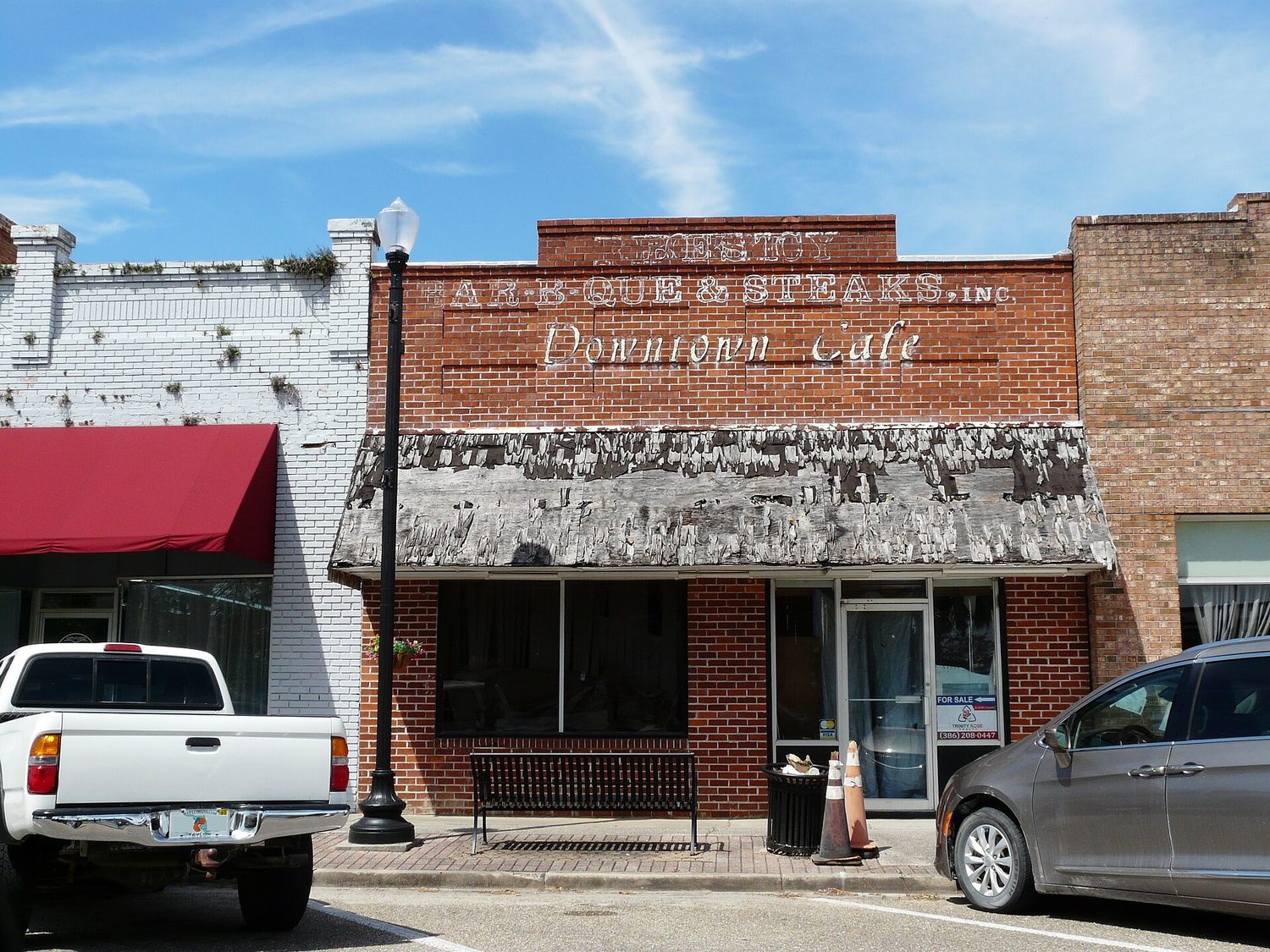
The settlement that became Perry was first called Rosehead. In 1875, it was renamed Perrytown after Madison Starke Perry, the fourth governor of Florida. The name later shortened to Perry. The town incorporated in 1903 and became the seat of Taylor County. That is the official record, and it is tidy enough. But the reason anyone stayed, built, and kept coming back has always been timber.
Taylor County’s economy has run on the forest for as long as there has been a county. The pines paid for the houses, the schools, the stores. They still do. Perry is known as the Tree Capital of the South, and that is not a slogan dreamed up by a marketing board. It is a statement of fact about how this town makes its living.
The proof is in the festival. The Florida Forest Festival began in 1956 as the Pine Tree Festival. It was created to teach forestry heritage and fire safety, at a time when forest fires were crippling the county’s timber industry. That origin matters. The festival was not born as a tourist draw or a civic vanity project. It was a response to a crisis. The woods were burning, the mills were hurting, and the town decided the answer was education and celebration, in equal measure.
The festival has run since. Its Saturday centrepiece is the King Tree Parade down Jefferson Street, followed by the World’s Largest Free Fish Fry, served at Forest Capital Park from noon. There are chainsaw and cross-cut competitions, the Paul Bunyan Lumberjack Show, and the Great Race 5K. The weekend is loud, sawdust-covered, and entirely on brand. It is Perry telling itself, and anyone who shows up, what it does and why that matters.
Just south of town, on US 19/US 98, the Forest Capital Museum State Park sits on 13 acres. The museum holds displays on the history of the forest industry and the wildlife of the forest. Beside it stands a reconstructed Cracker homestead — house, barn, well, arbor, and garden — showing how a Florida homestead family lived. The pairing is deliberate. The museum tells you how the timber got cut. The homestead tells you who did the cutting, and how they lived while they did it. Neither is a sanitised diorama. They are working exhibits of a working history.
The census numbers give you the rest of the picture. Perry has a population of 6,965 people. The median age is 34.8 years, which is younger than you might expect for a rural county seat. The median household income is $44,815. The median home value is $122,900. The median gross rent is $949. Unemployment sits at 6.6 percent.
Here is the number that tells you the most: zero housing units are held for seasonal or recreational use. Zero. Out of 2,968 total housing units, not one is a vacation rental or a second home. There are 552 vacant units, but vacancy here means transition, not speculation. People in Perry do not buy houses to visit in the winter. They buy houses to live in, work in, and raise families in.
The education numbers are modest. 18.6 percent of residents hold a bachelor’s degree or higher. That is below the national average, and it shows in the shape of the local economy. This is not a college town. It is a working town, and the work is physical. The forest does not care about your credentials. It cares whether you can run a saw, drive a truck, and show up on time.
Perry is not a place that tries to be something else. It does not have the coastline, and it does not pretend otherwise. The identity here is inland, pine-scented, and rooted in a single industry. The festival, the museum, the homestead, the parade — they all point the same direction. This is a town that knows exactly what it is and has spent nearly seventy years saying so out loud.
The Florida Forest Festival has run since 1956, when it began as the Pine Tree Festival. That is a long time to keep a party going. But the festival was never just a party. It was a teaching tool, a fire-safety campaign, and a civic declaration of faith in the timber economy. When the woods burned, Perry did not abandon the forest. It built a festival to explain the forest, protect the forest, and celebrate the people who worked it.
That is why Perry is where it is. Not because of the railroad, though the railroad helped. Not because of the governor, though his name stuck. Perry is where it is because the trees were here, and the people came to cut them, and they stayed to build a town around the work. The festival is the town’s way of remembering that, every single year, without fail.
The homestead beside the museum is the quietest exhibit, and the most honest. A house, a barn, a well, an arbor, a garden. That was the whole world for a Florida homestead family. They lived off the land, and the land was forest. The museum next door shows what they took from it. The homestead shows what they gave back.
Perry is still that place. The work is harder now, the regulations tighter, the markets more complicated. But the trees are still standing, the festival still runs, and the town still shows up. The Tree Capital of the South is not a title you claim. It is a title you earn, every day, and then prove again on the first weekend of the festival.
Every business named above is one we hold a listing for, and every date traces to a source on our sources page. We do not describe menus, interiors or service we have not verified. Details change — confirm before you travel.